Literacy Mini Lesson
Lesson Overview
Kindergarten
Morning Routine: Soft Start, Calendar, Show & Tell
This class had a very evident morning routine, this was clear because the students knew exactly what was expected with very few reminders. As the students arrived, they put their things away and then changed their home reading book and answered an attendance question on the board. To transition from their soft start activities, they sang a clean up song, when students heard the song start, they knew to begin cleaning up. I noticed everything the students were using at each of the stations was within their reach and ability to clean up and put away without needing adult assistance.
After cleaning up, students went to the carpet. During calendar, I noticed very consistent prompting from their teacher, similar words and phrasing to what she used the previous week we observed the class. For example, when looking for “Tuesday” to put up the current day of the week she said, “Today is tearful taps favourite day but don’t let that bossy ‘h’ fool you.” This was helpful for the students in recognizing Tuesday versus Thursday and a reminder of how the “bossy h” changes the “T” sound.
For show & tell, five students shared an object they had brought from home. Each object started with the letter “W,” because that is the letter they were currently learning. The students sharing gave clues for their objects and the class guessed what it was. In addition to learning different “W” words, the teacher shared with us another purpose of this activity was to build questioning in the students. I noticed a lot of repeat questions throughout each show & tell, as well as gentle prompting about what a question is and how our voice changes at the end of a sentence when asking a question.
Math Routine: Centres
We were in this class twice and both times for math 1-2 new centres were introduced for the students. During math centres, students played games and rotated through activities at 4 different stations with their table groups. The students spent approximately ten minutes at each station and I think setting a kindergarten class up this way is so beneficial because it keeps them moving and engaged and allows for a ~35 minute math block. Keeping some stations consistent allowed students to be successful and practice skills they already learned, and introducing new concepts through one new station made so the teacher could stay at that table to give small group instruction and help them understand the expectation.
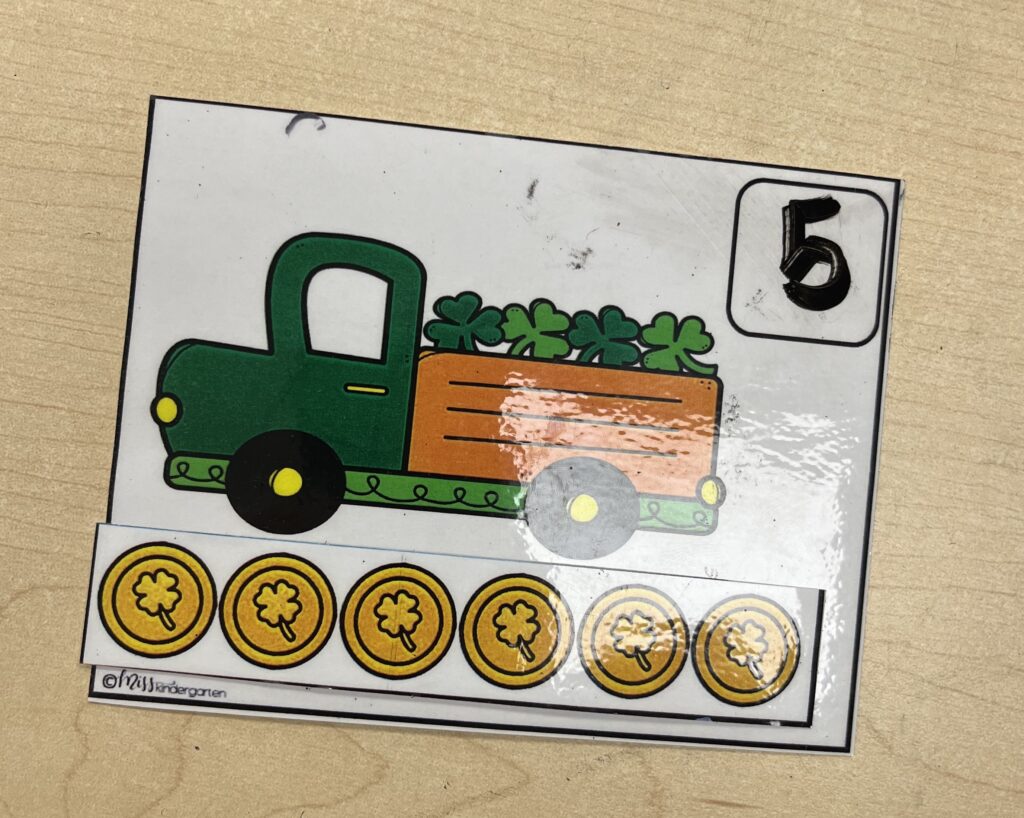
While at the carpet, the teacher introduced two new math centres they would be trying today, and the other centres were known to the students already. In one new centre, students would be using laminated “rulers” to measure images with non-standard units and write their measurement in the box.
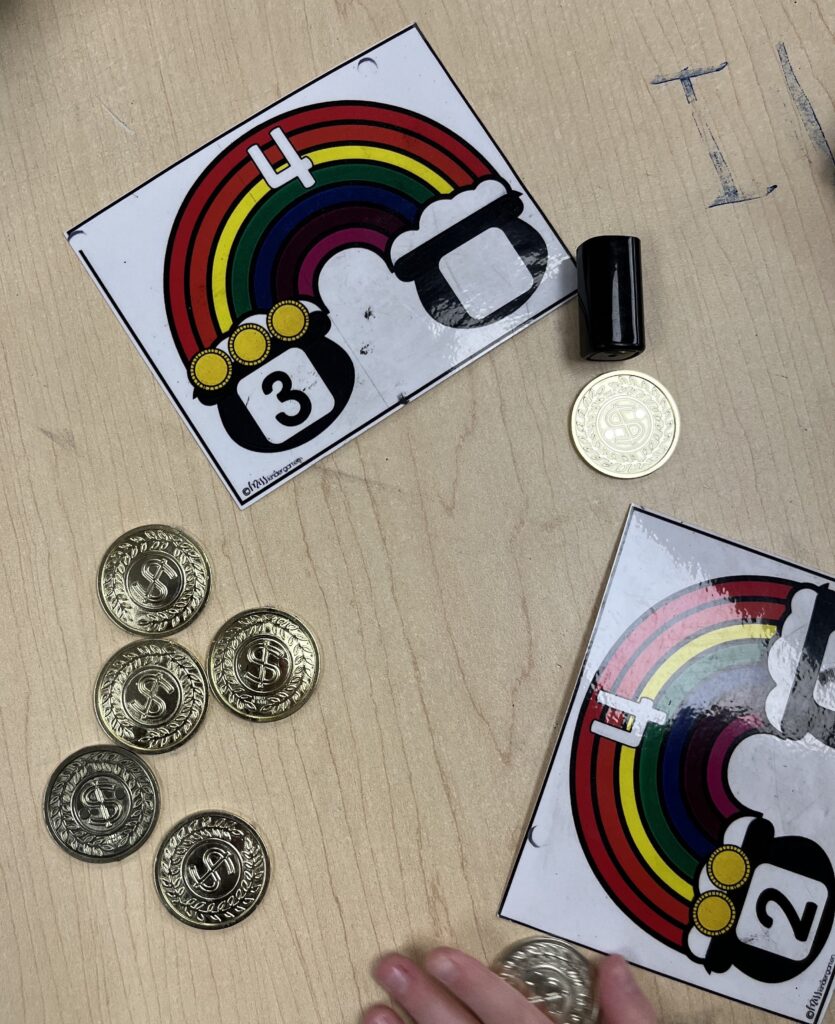
In the other new centre, students were doing an activity that was very similar to one of their centres from a previous week we observed. In this centre, students were asked to find the missing number, essentially building to subtraction. Students would use coins as manipulatives to create the number at the top of the rainbow, then they would separate the coins into each side. On one side, the number was given and on the other, they had to determine what it would be, thus figuring out what two numbers make the number on the rainbow. Then students record that number in the box.
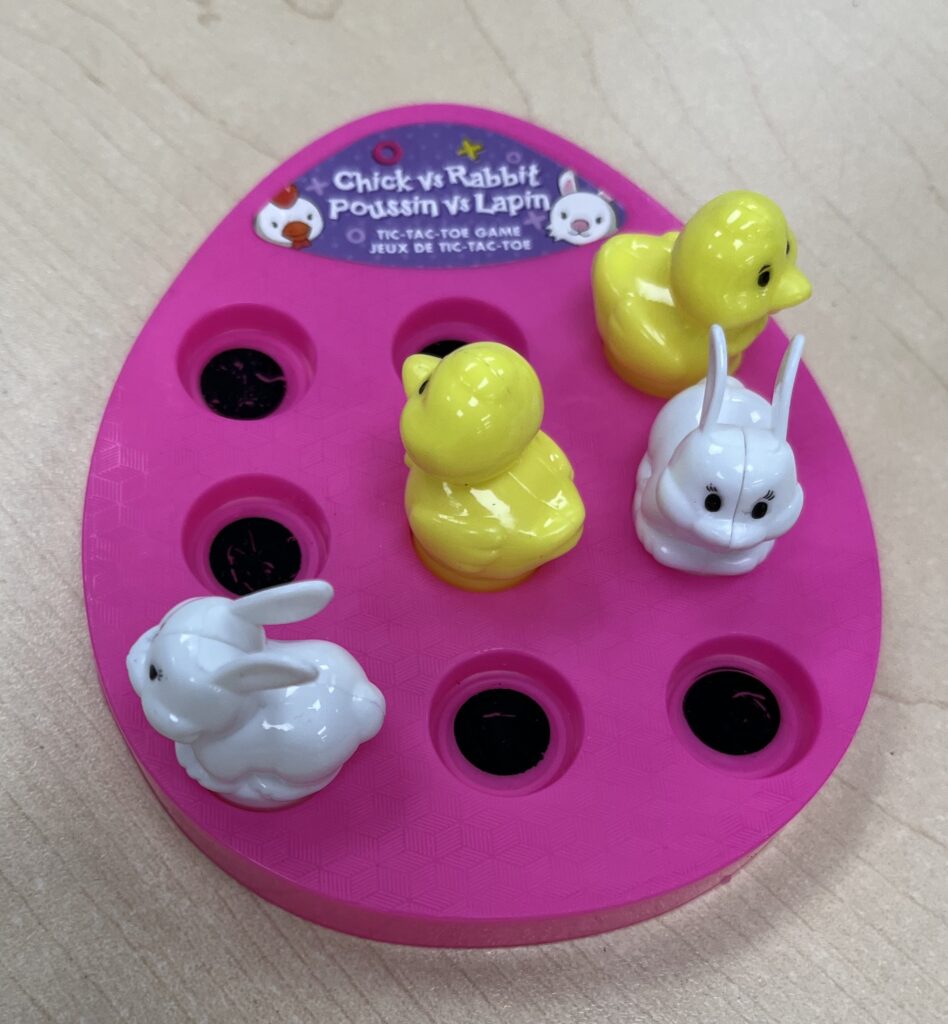
The other two centres were tic-tac-toe using a spring themed game and a matching game. What I liked about the centres in this class, was that the games scaffolded in a lot of ways allowing for students to practice the same skills through a variety of games to help maintain engagement, and so students practiced the skills in different contexts. I also like that the stations ranged from independent, to partnered to their whole table groups playing together, and that the activities varied from math games to problem solving, and had students practicing fine motor skills, writing and specific math skills.
BC Curriculum
Literacy Connections: During soft start, one of the activities was drawing on whiteboards. Students were copying titles from home-reading books and reading them aloud. This practiced letter formation and the association of letters with sounds and words. During calendar, students were practicing recognizing words and the letters that make up different words. During show & tell, students were listening, making connections, and asking questions.
- ELA CONTENT:
- Strategies and Processes: Oral language strategies, writing processes
- Language features, structures, and conventions: Concepts of print, phonemic and phonological awareness, and letter formation
- ELA COMPETENCIES:
- Engage actively as listeners, viewers, and readers, as appropriate, to develop understanding of self, identity, and community
- Exchange ideas and perspectives to build shared understanding
- ELA BIG IDEAS
- Through listening and speaking, we connect with others and share our world.
Math Connections: During soft start, one of the activities was a stem activity that encouraged building and problem solving. During calendar, students worked with the teacher to use their attendance numbers to create a math sentence.
- MATH CONTENT:
- Number concepts to 10
- Decomposition of numbers to 10
- Direct comparative measurement
- MATH COMPETENCIES
- Estimate reasonably
- Visualize to explore mathematical concepts
- Represent mathematical ideas in concrete, pictorial, and symbolic forms
- MATH BIG IDEA
- Numbers represent quantities that can be decomposed into smaller parts.
REFLECTION
I loved every class I was able to observe, but this one really stood out to me for some reason. When I started in EKTEP, I saw myself teaching kindergarten one day and classrooms like this make me feel excited and confident about teaching. I had three major takeaways from observing this classroom (and the grade 1 class).
- Routines and procedures consistency
- Organization / class set up
- Curriculum connections everywhere
Routines, Procedures, Consistency and Classroom Management
This class had so many very clear routines and procedures throughout their day. This was clear because of how easily the students were able to transition from one thing to the next and anticipate what they were expected to do. We only observed for a short time each day, but I still feel confident from what I observed that this class had routines for each part of their day. I detailed their morning routine, but even during math, the students knew to completely clean their station before moving on and the direction they were moving with little to no prompts. We learned in our management class last semester how important routines are for students as it allows them to know what to expect and what is expected of them. When students know expectations, they are able to live up to them.
Organization and Classroom Set-Up
The kindergarten and grade 1 classrooms we observed as our rainbow class were both so organized and intentional. The materials and supplies for students were clearly labelled and set up in the room in ways that made them accessible to the students. I think these classrooms ran more smoothly because of the attention paid to ensuring the room was designed for the students. When I begin teaching, I will remember the effect of creating a classroom with the students age and ability in mind.
(Curriculum) Connections Everywhere
In this class, I noticed so many instances where students were practicing multiple skills and combining knowledge from different subject areas. For example, the soft start activities pulled from different content areas and curricular competencies in addition to providing unstructured time for students to explore, leading to a lot of social/emotional learning for students. Another example during their math centres, the stations are very diverse and practice different skills while also connecting to other things happening in class. Some of the stations were easter/spring themed, some were St Patricks day themed and she had one using dinosaur manipulatives that connected to their science unit.
Observing these classes really highlighted the importance of setting clear expectations for students and creating a classroom where students can be autonomous. As well as how many connections can be made across the curriculum in various activities. And overall just how much work, time and effort go into a classroom functions.
Resources
ACADIENCE
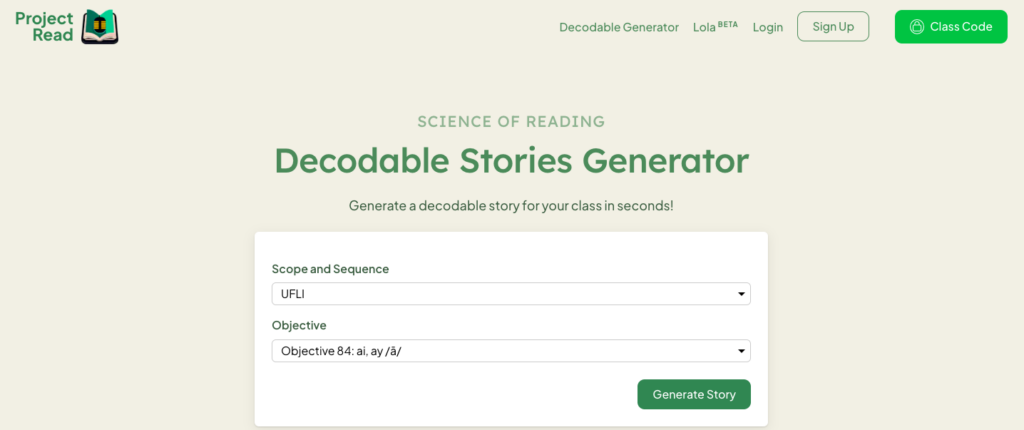
PROJECT READ
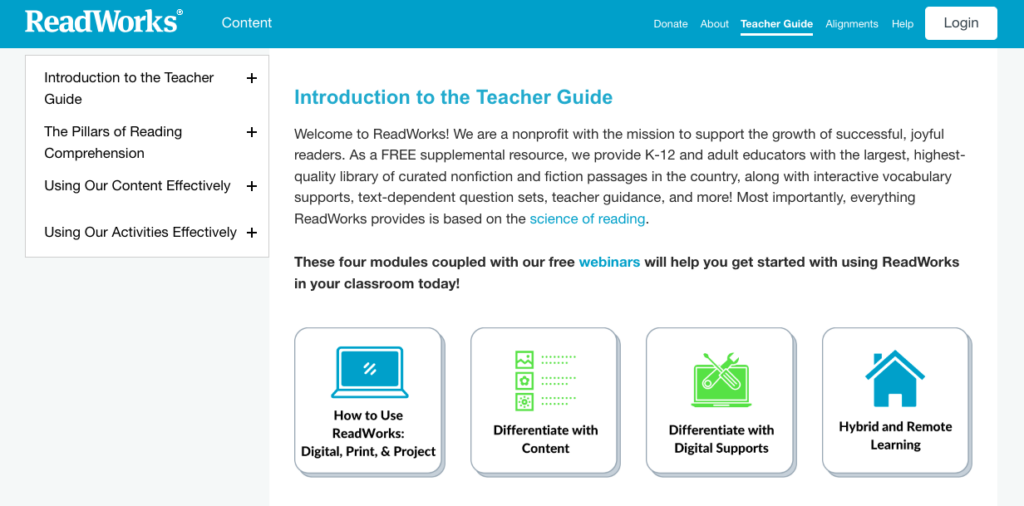
READ WORKS
The Science of Reading-UFLI