Class 3: Using Authentic Sources – Indigenous Content
DIVERSE BOOKS
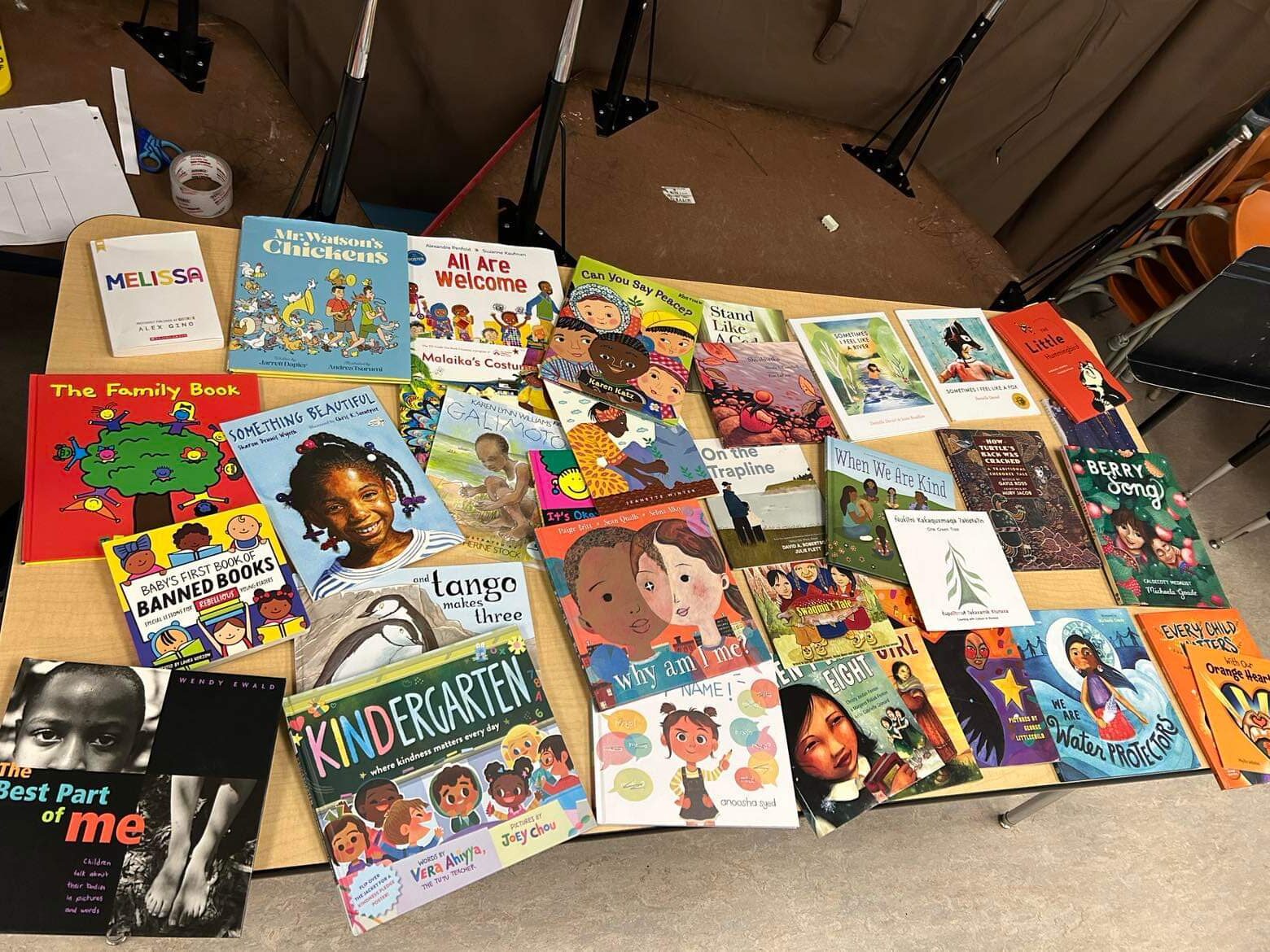
- The Best Part of Me by Wendy Ewald
- Kindergarten by Vera Ahiyya
- And Tango Makes Three by Justin Richardson and Peter Parnell
- Mr Watson’s Chickens by Jarrett Dapier
- Why Am I Me by Paige Britt
- Swaqmu’s Tale by Lisa Ede, Kathleen Elphick, Maxine Hawes and Lillian Rose
- That’s Not My Name by Anoosha Syed
- When We Are Kind by Monique Gray Smith
- On The Trapline by David Robertson
- Stand Like A Cedar by Nicola Campbell
- Shi-Shi Etko by Nicola Campbell
- How Turtles Back Was Cracked by Gayle Ross
- We Are Water Protectors by Carole Lindstrom
- Berry Song by Michaela Goade
- Stepping Stones: A Refugee Family’s Journey by Margriet Ruurs
COURSE CONTENT
Class Notes
- Decodable Books VS Levelled Readers
- Decodable: words using phonetic code learned up to that point, few non-phonetic high frequency words, requires child to decode each word (short simple sentences, focus on learned skill (short vowel sounds, digraphs etc)
- Levelled: repeated and predictable text, many high-frequency words, words not decodable based on instructions
- Mirrors, Windows and Sliding Glass Doors
- I appreciated this analogy a lot because I really enjoy reading and feel this is an accurate way to view and portray reading to children. Stories should allow you to see yourself reflected back to you, and offer a glimpse into other lives and an entry point into other worlds. Books are so valuable for their ability to show other lives that can resemble your own in some ways while exposing you to new ideas and perspectives.
- For example, as I was reading Refugee, I thought of how it’s interesting to read -and would be for children whose ages were similar to the characters- about the lives of others and how they are so relatable even though it takes place in different decades and countries, and going through unbelievable trauma.
- Authentic Sources
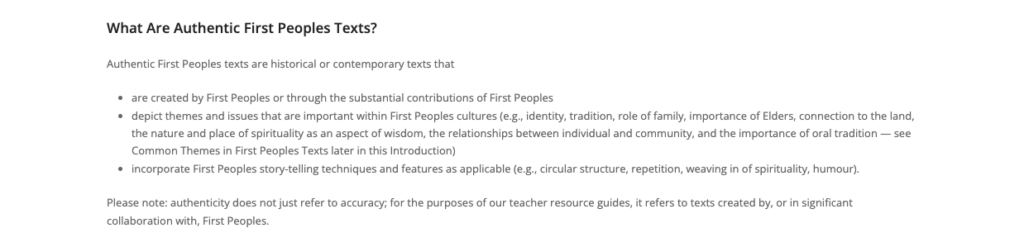
- Choosing authentic sources is really important for providing valuable and appropriate content in the classroom. As educators, I think we all worry about the quality of resources we use in our classrooms. In this context, we talked about how to choose authentic Indigenous resources and what makes them authentic. In searching this topic, I found a checklist post by Jo Chrona developed by FNESC that outlines some things to consider when looking for authentic resources
- https://luudisk.com/2022/01/14/authentic-indigenous-resources/
RESOURCES
Lesson Intro Idea: Cover the words of a story with sticky notes, walk around the class and allow each student to describe what they see/interpret in each picture.