
Learning ultimately supports the well-being of the self, the family, the community, the land, the spirits, and the ancestors.
Process
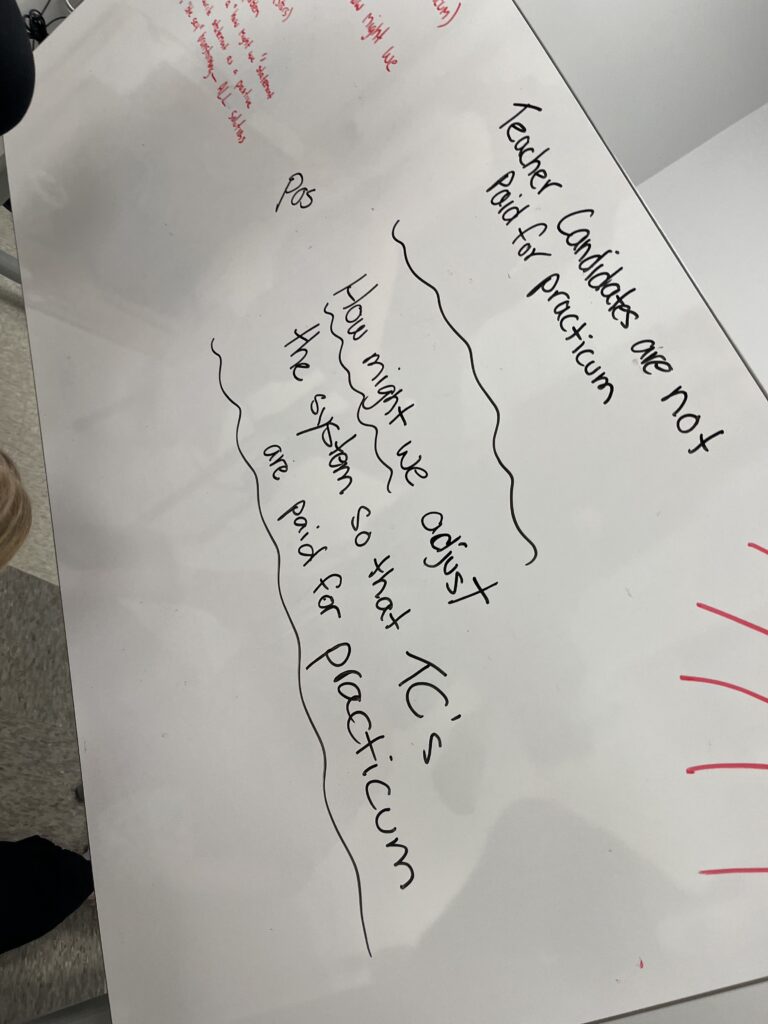
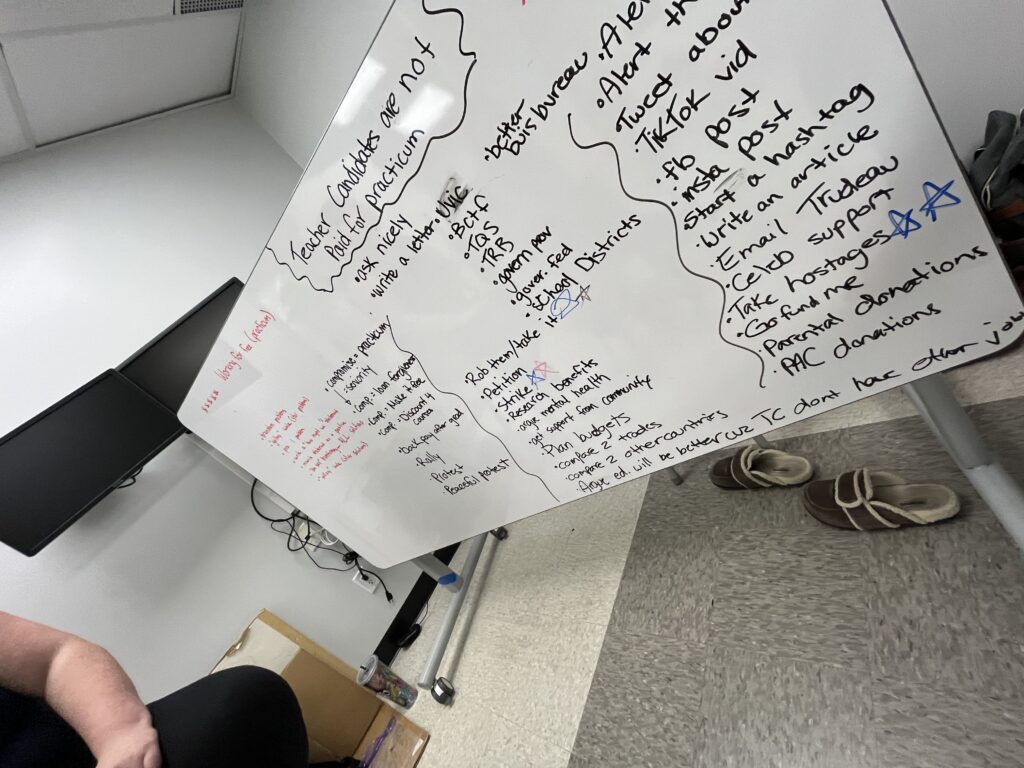
- Brainstorm a list of problems (in groups, vertical white boards)
- Do a gallery walk and look at the problems that other groups have come up with, each group/person gets five stars to give to favourite problems.
- Go back to your list and choose one of your problems.
- Write a “how might we…” statement to address the problem.
- Re-write the statement as a positive.
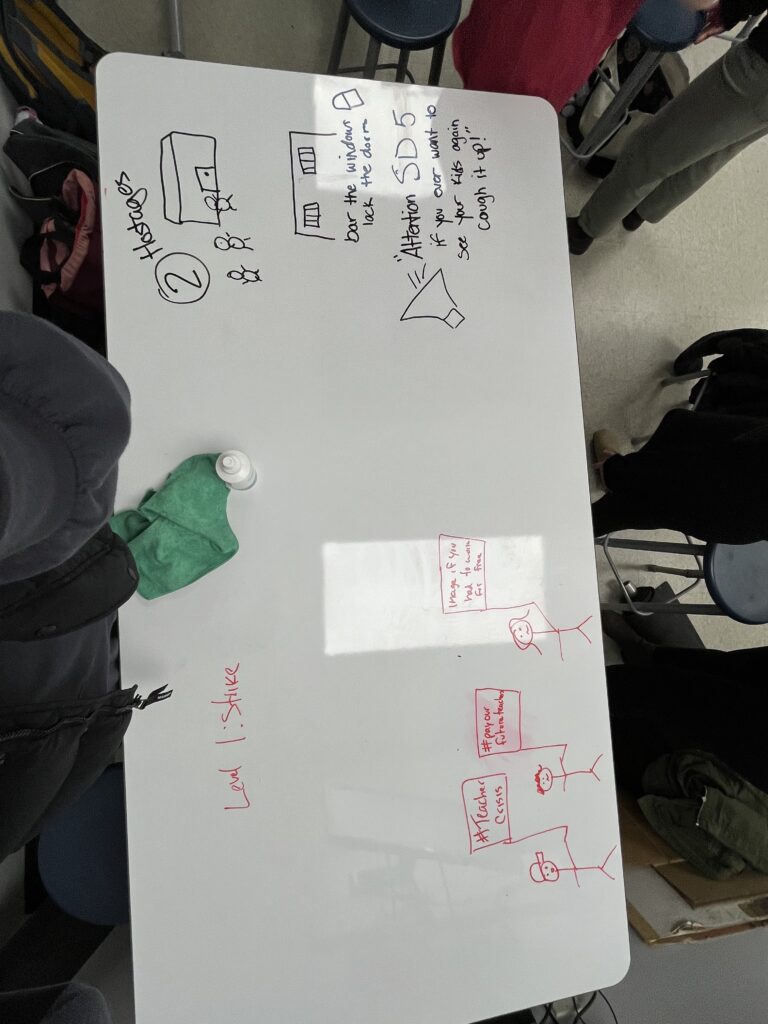
- Blue sky thinking — brainstorm a list of solutions for the problem — the sky is the limit, don’t think about logistics at this stage – don’t stop until you have at least 100.
- Do a gallery walk and look at the solutions that other groups have come up with, each group/person gets five stars to give to favourite problems.
Highlights
I loved this activity. I think it would go over well with students and they would be equally invested. I also think this process could be adapted to different activities or prompts and still work. I especially love the ‘blue sky thinking” because it really takes the pressure out of this activity and encourages students to share without feeling like their idea isn’t good enough.
Readings:
Kye references several other researchers in their article and found that “three forms of engagement sustained youth engagement in a makerspace: critical engagement with issues that framed their lives, connected engagement with peers and mentors, and collective engagement around community experiences and struggles rather than individual interests” (Kye, 2020, p. 4).