

Principles of Makification from: Cohen, J., Jonathan Cohen, W Monty Jones, Shaunna Smith, & Brendan Calandra. (7). Makification: Towards a Framework for Leveraging the Maker Movement in Formal Education. Journal of Educational Multimedia and Hypermedia, 26(3), 217.
Highlight:
The use of “jumping off points” -as i’m reflecting – became a bit of a theme throughout the course but here is where I noticed it began. I love the jumping off points to really hook students in to the activity.
Caine’s Arcade:
Caine, a young boy, creates an entire arcade out of cardboard. We used this as inspiration for our maker project to create an arcade game out of cardboard and other available materials.
Learning is holistic, reflexive, reflective, experiential, and relational (focused on connectedness, on reciprocal relationships, and a sense of place).
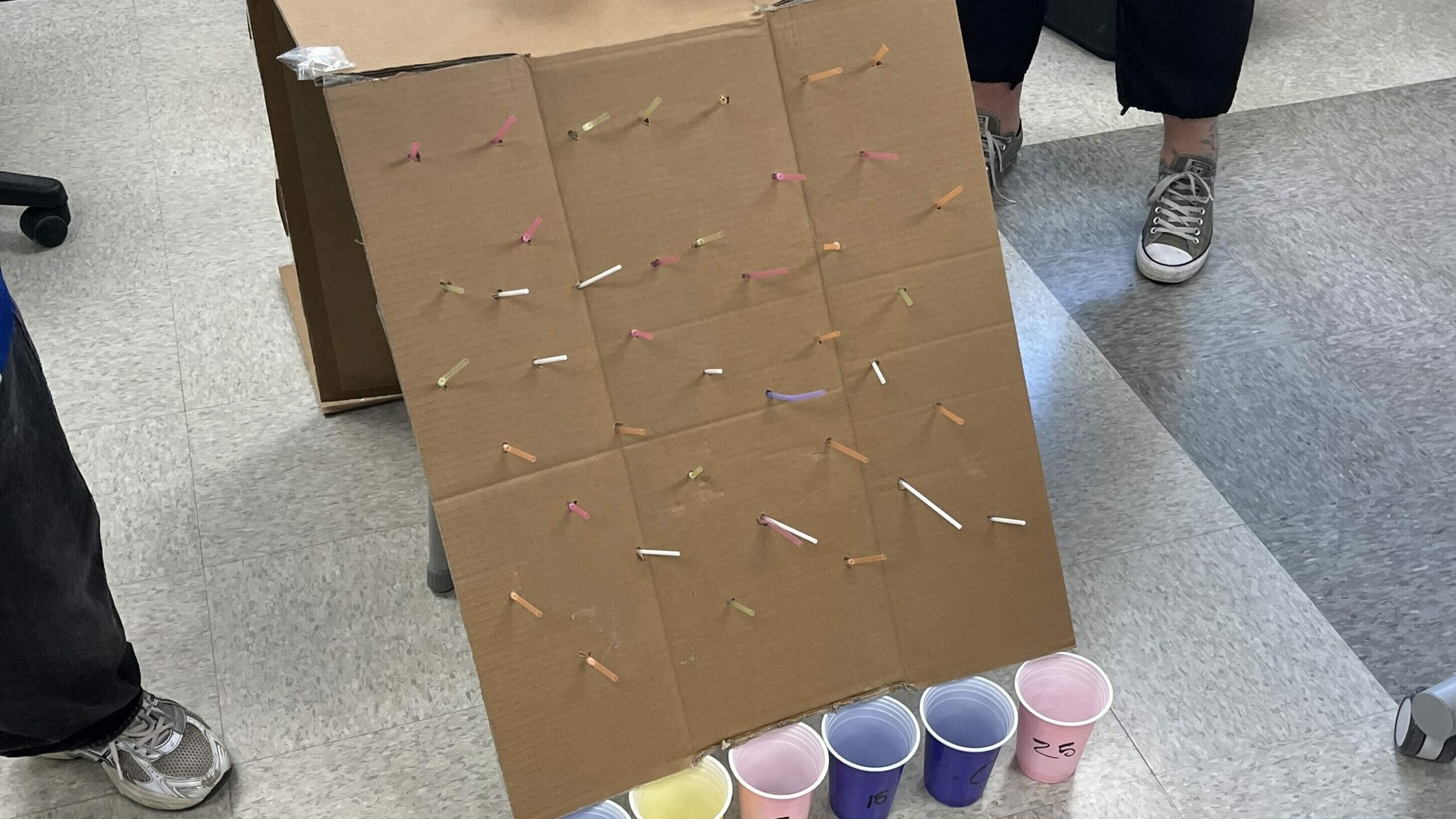
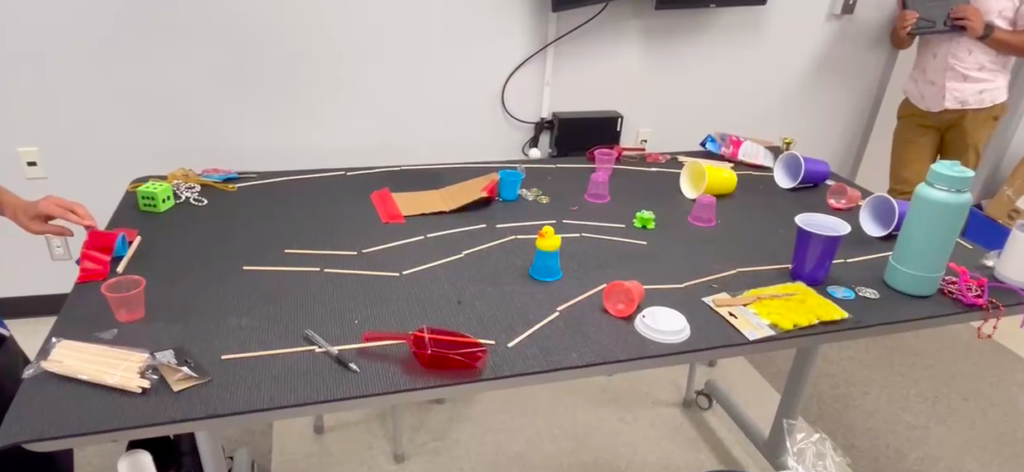
GalleryWalk
A key part of makification, emphasized throughout 487 and backed up with research from Cohen et al., is the idea of sharing. Cohen et al. say sharing “empowers” students to share “their own unique knowledge and experiences” (Cohen et al., 2016, p. 3). I feel like in traditional classrooms students typically only shared if they knew the correct answer to a question, particularly in older grades. When students share in this way, they are empowered, as Cohen says, because they can share what they learned and their background knowledge that can affect how they interact with the content and thus affect their end product.
Sharing is tough for me because I tend to be pretty anxious and historically, sharing looked like being put on the spot and telling the whole class what about your project. I really liked the more lowkey sharing where we created things as a group and then walked around to see what other groups had come up with and tested out their product.
I loved the noise, collaboration, laughter and all the learning that took place. It inspires me to create something similar in my future classroom.