Literacy Mini Lesson
Curriculum
CONTENT
English Language Arts 6
Content:
- Story/text – forms, functions and genres of text
- literary elements – narrative structures, characterization, and setting
- Language features, structures and conventions – paragraphing
- Language varieties and conventions
- Presentation techniques
Curricular Competency:
- Comprehend and Connect – Understand how literary elements, techniques, and devices enhance and shape meaning
- Recognize and appreciate how different features, forms and genres of texts reflect various purposes, audiences and messages
- Create and Communicate – Use writing and design processes to plan, develop, and create engaging and meaningful literary and informational texts for a variety of purposes and audiences
- Transform ideas and information to create original texts
Core Competency:
- Communication and Creative Thinking
Big Idea:
- Exploring stories and other texts helps us understand ourselves and make connections to others and to the world
Applied Design, Skills, and Technology 6
Content:
- Digital Literacy – search techniques, how search results are selected and ranked, and criteria for evaluating search results
Curricular Competency:
- Select, and as needed learn about, appropriate tools and technologies to extend their capability to complete a task
Big Idea:
- Complex tasks may require multiple tools and technologies
BC Curriculum: https://curriculum.gov.bc.ca/curriculum/english-language-arts/6/core
Lesson
Fractured Fairy-Tales
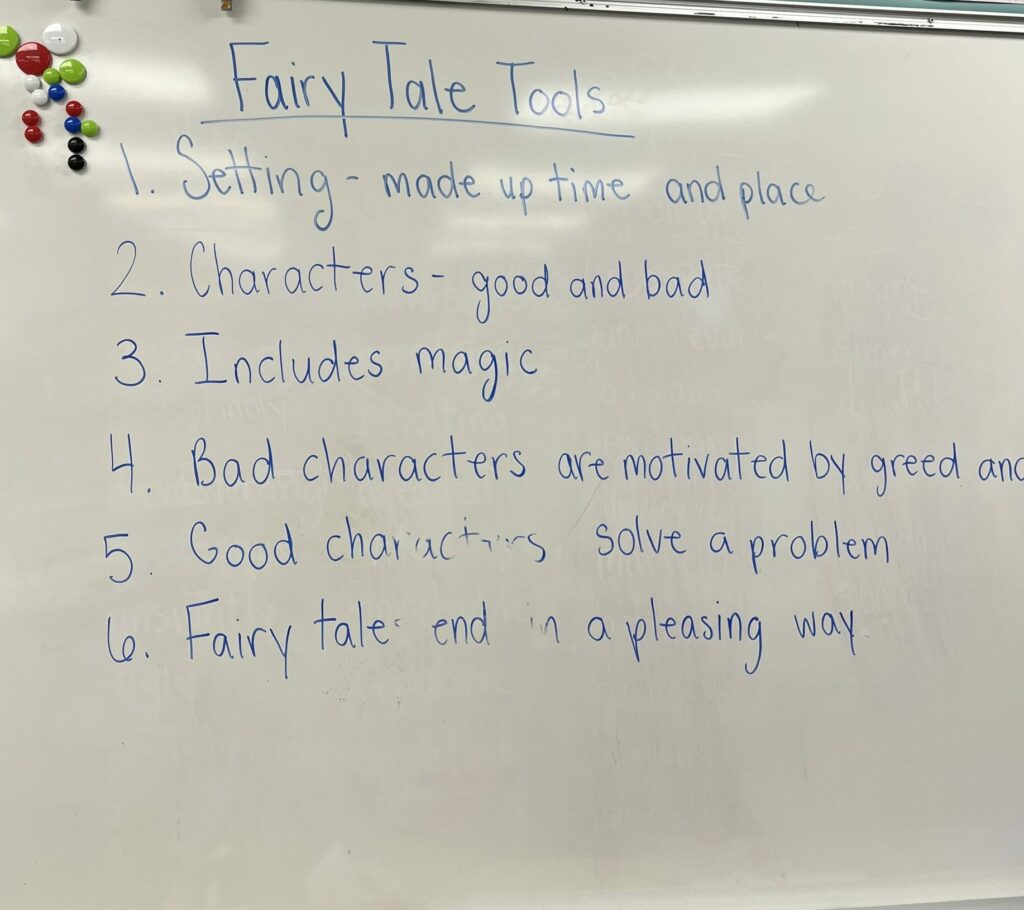
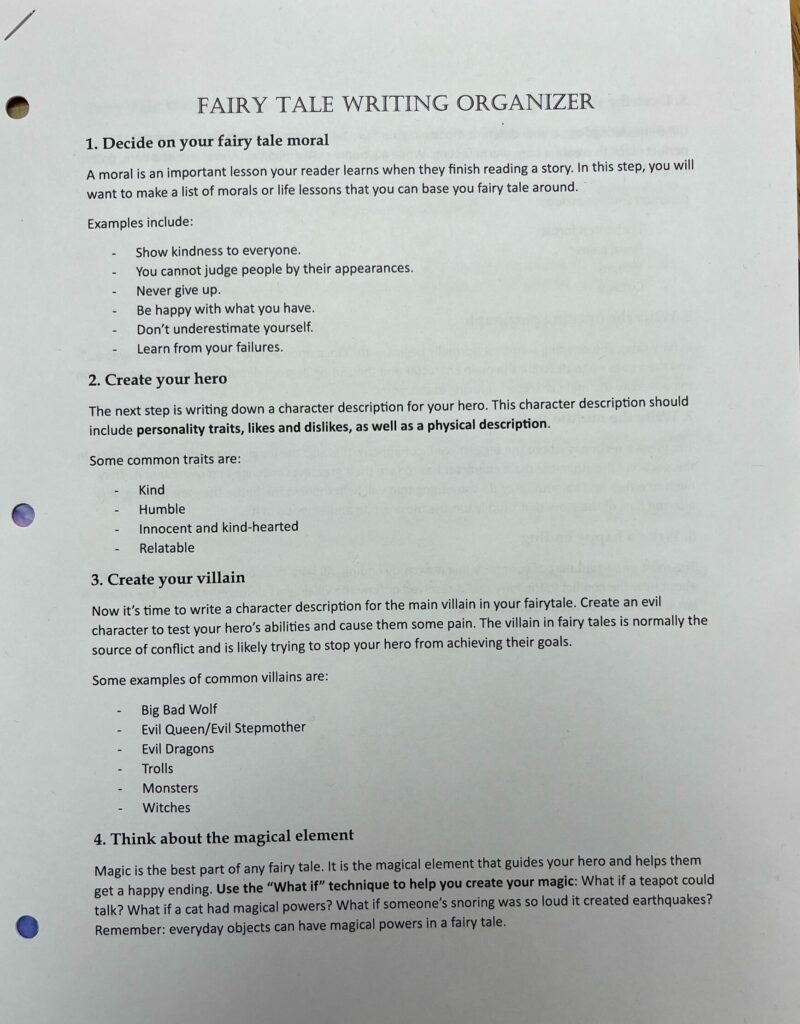
The teacher introduced this lesson by asking the students what are the components of a classic fairy-tale and brainstorming the responses on the board. Then she talked about fractured fairytales – fairy-tales that have some sort of twist to them. As an example of this concept, she read “The TRUE Story of the Three Little Pigs” by Jon Scieszka, aloud to the students. Using some of the criteria the students came up with for parts of a fairytale, the teacher gave the students a planning sheet and told them they could come up with their own fairytale or they could rewrite a classic fairytale – write a fractured fairytale. The planning sheet sections included: villain, main character, magical element, characters (overview), setting and plot ideas.
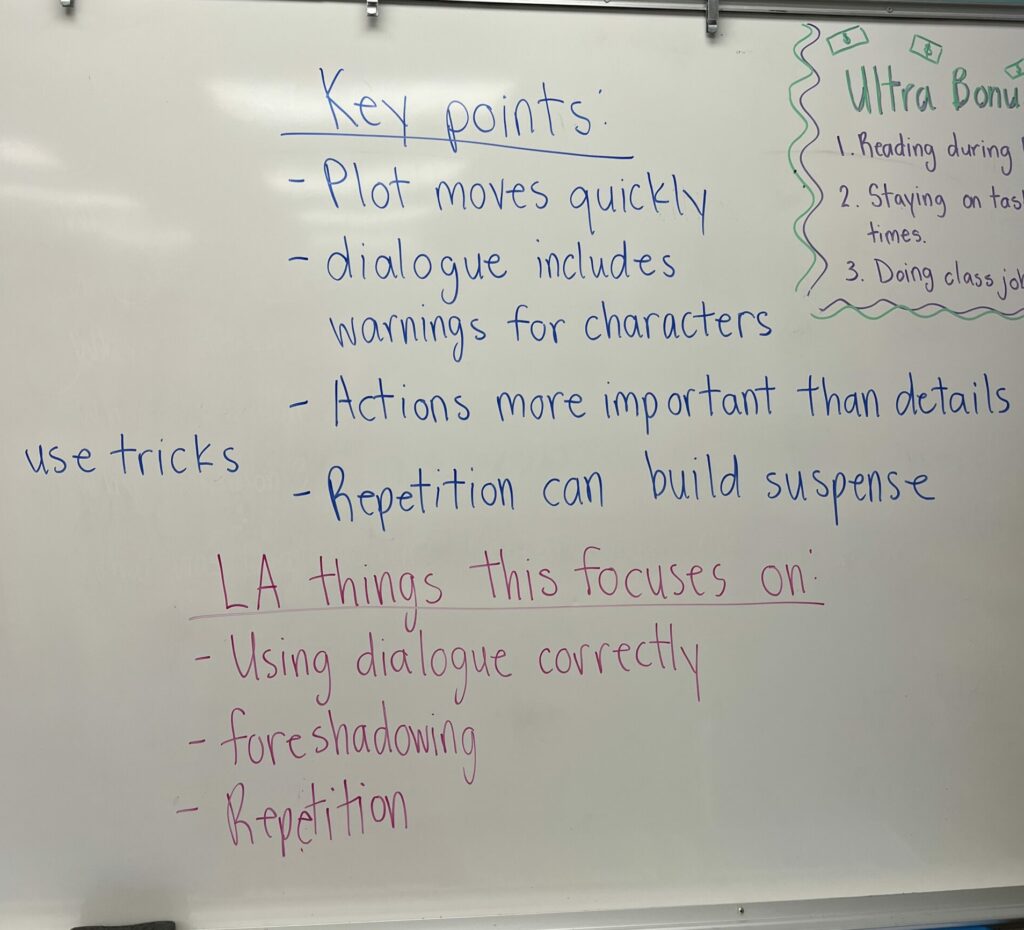
The next part of this lesson I observed was when she was showing students introductions to classic fairy-tales. The teacher read several introductions, talked about the components involved in the introductions and then she wrote an example fairytale introduction on the smartboard taking suggestions from the class. After the example, she gave the students some examples of “fairytale starters,” things like, “once upon a time,” “long, long ago,” and “there once was a princess,” to help the students get start as they began to write their own introductions.
Because this is going to be my practicum class, I was able to see another part of this lesson. I believe the end goal for the stories is to actually create a fairytale book by the class with all their fairytales printed in it. So the plan for the artwork is for the students to use AI to create the different images they want to go along with each bit of writing in their story. This lesson involved the teacher introducing the students to the AI site they would be using, and doing a demonstration to show them how to navigate the site -searching and saving images, and choosing an “art style” – as well as ways to search that might change what image comes up (be as specific as possible, use commas to separate etc). She gave the students this time to play around with the site and start to figure out how to create their search in order to get what they’re looking for.
REFLECTION
REFLECTION
I am really excited to see how this assignment turns out. I think this project really allows for student creativity and choice but it is also structured enough that they are learning and will have guidance throughout the process. Something especially notable about this assignment is that it was really well scaffolded. I feel like each piece is consistently built upon, and this is going to help the students to really engage with the project and challenge them without being too difficult. I think this also helped as an outsider observing to be able to help the students because the teachers expectations were really clear from the handouts and notes, so I felt like I was able to guide the students when they were stuck.
The students were (mostly) all really excited to share their ideas, especially at the early stages of writing and creating, and I think it was beneficial for them to have extra adults in the room to hear their story planning and respond positively – giving some ideas and feedback but mostly just being there to listen as they developed their ideas.
Another thing I really like about this assignment is the use of technology and AI to create the pictures that will go along with their story. It’s important that students know how to properly use technologies and in order for them to learn this, they must have opportunities to try them and be explicitly taught how it works and shown contexts when it is appropriate. Additionally, because of the way the assignment was laid out with the writing piece being started first, the use of AI is going to be used to supplement the learning without sacrificing learning outcomes. Students will be less tempted to use AI to try and write their story. This is also mitigated by the fact that the part of the site they are using is 1) school district approved and 2) creates images only.
Overall, I really enjoyed being able to observe this lesson and support the students as they wrote their fairytales. I have saved as much as possible from this experience so that I have gained a resource for the future. Being able to see the lesson in action also makes it much more memorable for me and more likely to use it in the future. Because the lesson is contextualized and i’ve seen it demonstrated then I feel it will stand out more and actually be a valuable resource. In some cases students can feel bombarded with resources and material but it’s never tethered to something or fully explained and so they can lose some value in that sense.
** I may have misremembered some details or written them in the wrong order – this is my recollection, and it may not be exact.