
Reflecting
What I love about each class so far, has been the consistent reminders that while we are all in the same class, following the same cues, we all have different bodies, goals and abilities. Do what feels right in your body for your practice. The class starts out in child’s pose and she states to come back here if you need a minute to breath, a drink of water or towel off for a variety of reasons, if the pace is too fast or if it’s too hot. I feel like the philosophy present in each class aligns with things I would like to include in my classroom. As a teacher you can give kids that option. If this is too much for you, here is what I want you to do instead. If it’s too loud in here, you can go rest in the quiet corner or lay your head on your desk and close your eyes. What works for you? What will be beneficial for your practice. It’s totally okay to do things differently. I really want kids to feel like they can do things at their own pace and in their own way. I would like to teach, and allow them to advocate for themselves and communicate what is working for them and when they need a break. I know at younger ages especially they would need a lot of guidance in when it’s appropriate to do this, but ultimately I think it’s a lot more valuable for children to be able to recognize when they are overwhelmed and then have the skills to cope, and not to just power through and end up hurting themselves.
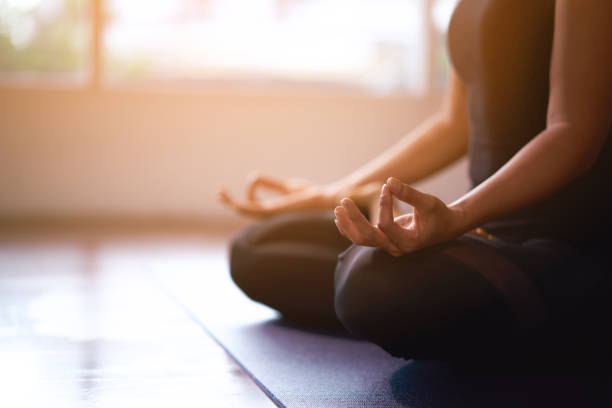
Another thing I really enjoy at the beginning of every class she says to let go of your week and focus on your practice right now. Don’t think about the things you need to do, for the hour you are here, focus on being really present here. I feel mentally and physically engaged during the classes – never bored, distracted or restless – though I’m aware yoga isn’t for everyone. I have really appreciated a solid hour where I don’t need or want to look at my phone, I don’t feel like if someone messaged me I have to get back to them right away.
Learning
One of my guiding questions for this inquiry is how can I incorporate yoga – the practice or what I have learned from the practice – into a classroom. Will children be involved and engaged enough to actually benefit from a yoga inspired movement break. An actual yoga class would be great for high school or even middle school students but I would like to find a way to shorten and simplify those classes for children at the elementary level. Some of the ideas I learned about this week include using yoga to teach children the importance of mental and physical health, as well as using yoga as a tool for children to help them self regulate. It’s also a way to open that conversation about how your body and mind are very connected and to teach children to listen to their bodies.
Yoga as a potential tool for the youth to deal with stress and to regulate themselves. Yoga provides training of mind and body to bring emotional balance.
Ingunn Hagen and Usha S. Nayar
This week, in addition to a class, I chose to read a few peer reviewed articles (1, 2) in order to build a more secure knowledge basis for this inquiry. I am aware of many opinions and personal anecdotes but I was curious if the research would concur. My understanding from the articles I read, is that the preliminary research is very positive and there seems to be relationship between yoga and mental health; yoga is used as a supplementary aid alongside medication and therapy (Yoga for Trauma and Related Mental Health Problems, p53).
The first article, “Yoga for Trauma and Related Mental Health Problems,” examined the use of yoga to mitigate symptoms of anxiety, depression, PTSD, and for overall mental health. The second article, “Yoga for Children and Young People’s Mental Health and Wellbeing,” focused specifically on including yoga in schools and as a tool for children to help manage increasingly high levels of stress. I liked the second article because of it’s relevance to teaching and because of how it explains what is happening in the body that benefits the mind. For example, the second article states “yoga can guide relaxation because it reduces sympathetic activity,” (p4) the sympathetic nervous system has to do with fight or flight so yoga can be calming.
Both articles concluded that more research is needed for a better understanding of how yoga can be used to improve mental health and particularly what the impact would be on children and what the yoga practices would look like that children partake in. Additionally, the second one went on to say we still require a way to introduce yoga to children and classrooms in an effective and fun way. Neither of the articles were published within the last five years, so maybe there is more updated research and I will continue looking. I am happy to see that so far it seems the research is indicative of a positive correlation.
Resources -next week
I also looked on GoNoodle to see what types of movement break videos they had with a focus on yoga, and found the ice melting video I’ve seen used in classrooms before! I really like this idea and think including something along these lines would be super beneficial in classrooms. There were also a few videos that told little stories to demonstrate the importance of breathing which is another important component of yoga – and different breathing charts/methods are very popular in primary grades. Next week I hope to go into more detail on resources for the classroom that involve yoga if I am able to find some or have any ideas!